
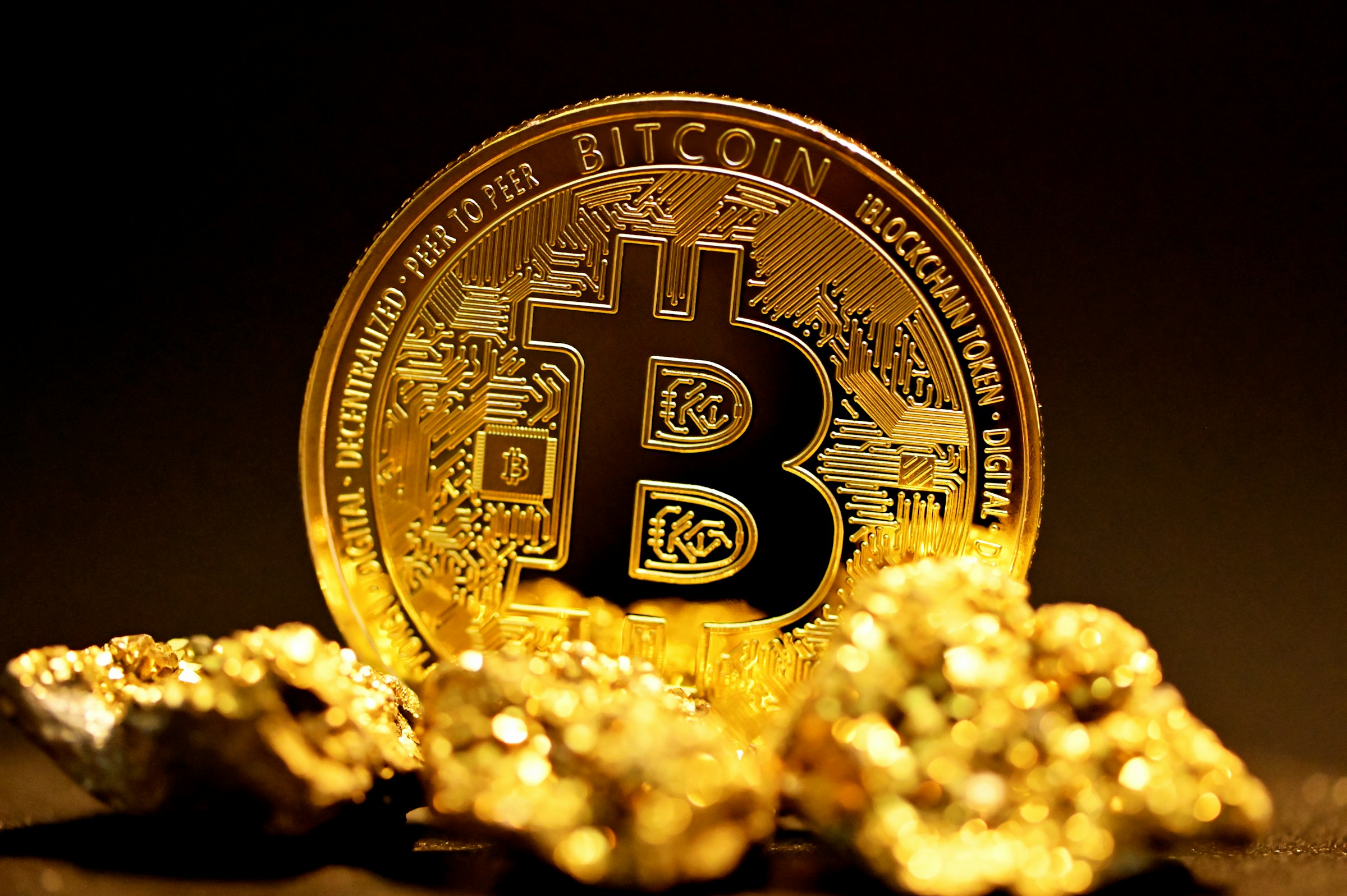
Bitcoin is digital money that you can send to anyone on the internet without using a bank. No company owns it, and no government controls it. You store it on your phone or computer, just like a photo or an email.
Think of it as cash for the web. When you buy a coffee with a debit card, your bank checks your balance, moves the money, and takes a fee. Bitcoin skips the bank completely. People run a shared network of computers that keeps track of who owns what, 24 hours a day.
How Bitcoin Works Without a Bank
Imagine a giant digital notebook that thousands of people keep on their computers. Every time someone sends Bitcoin, the transaction gets written in this notebook. Everyone sees the same page at the exact same time.
This notebook has a special name. People call it a blockchain. Instead of trusting a central manager at a bank, the network relies on math and code to prevent cheating. If someone tries to spend money they do not have, the other computers reject the entry right away.
Back in 2010, a man bought two pizzas for 10,000 Bitcoins. It was the first time anyone used it to buy a real item. Today, those same coins would be worth hundreds of millions of dollars. That simple deal proved that digital code could act like physical money.
Why Do People Value Digital Money?
Paper money gets its value because people agree it has value, and because governments back it. Bitcoin works in a similar way, but its rules are set in code from the start.
First, there is a fixed limit. Only 21 million Bitcoins will ever exist. A central bank can print more cash whenever it wants, which often makes paper money lose buying power over time. Bitcoin cannot be printed. This strict limit makes many people view it like digital gold.
Second, it is global. You can send 50 dollars worth of Bitcoin to a friend in Japan on a Sunday night. It arrives in minutes, and no central clerk can freeze your account or block the transfer. If you want to get started safely, read this beginner guide to crypto fundamentals to learn how people buy their first coins.
What is Bitcoin Used for Today?
People use this digital currency for three main reasons today. Each reason comes with its own set of rules and ideas.
- Saving for the long term: Some people buy a small amount every month. They hope it keeps its value better than cash stored in a standard savings account.
- Sending money far away: Crossing borders with normal bank transfers can take five days and cost 30 dollars in fees. Bitcoin moves across the world fast and often costs much less.
- Buying things online: Thousands of online stores, web hosts, and charities accept it directly at checkout.
Still, most people today do not spend it every day. They buy it as an investment, hoping the price will go up over time as more people join the network.
The Real Risks You Need to Know
Bitcoin is exciting, but it comes with real risks that every beginner must understand. The price swings wildly up and down. A coin might be worth 60,000 dollars today, 45,000 dollars next month, and 70,000 dollars next year. Never put in money you need for rent or food.
Security is another big deal. With a regular bank, you can call customer support if you forget your password. With Bitcoin, there is no phone number to call. You control your own money using secret keys, which are like long passcodes. If you lose your keys, your money is gone forever.
Scams are also common online. Fake websites offer to double your coins overnight, but they just steal your funds. You can check our crypto security tips for beginners to keep your computer and your coins safe from online thieves.
How Do You Get Your First Bitcoins?
You do not need to buy a whole Bitcoin. Each coin breaks down into 100 million tiny pieces called Satoshis. You can start with just 10 or 20 dollars if you want to try it out.
Most beginners start on a regular exchange website. You sign up, link your bank account, and swap your cash for coins. Once you buy them, you can leave them on the website or move them to a wallet app on your phone.
If you want to read about the history behind the coin, you can read the Bitcoin page on Wikipedia to see how it grew from a simple idea in 2008 into a global network. Learning how it works takes a little time, but the basic idea is simple.
Does the idea of managing your own money without a bank sound useful to you, or does it sound too risky?
How the Network Stays Safe
You might wonder how a computer network stays safe when no single boss is in charge. The answer comes down to a process called mining. Special computers around the world race to solve hard mathematical puzzles every ten minutes.
The computer that solves the puzzle first gets to add the next page of transactions to the shared notebook. As a reward for this hard work, the system gives that computer a small amount of brand new coins. This setup keeps the network honest because trying to cheat the system costs way too much time and electricity.
Choosing the Right Wallet
When you own digital coins, you need a safe place to keep your secret passcodes. People use two main types of digital wallets to handle this job.
- Software wallets: These are free apps you download to your phone or laptop. They are great for daily use because they make spending quick and simple.
- Hardware wallets: These are small physical devices that look like tiny USB drives. They stay offline, which keeps your money safe from hackers who try to break into connected devices.
Many people keep a small amount on their phone app for quick transfers and store the rest on a physical device at home. Taking time to learn these tools helps you stay in total control of your money.





0 Comments